
If you’ve got one chipped front tooth, a small gap you’ve never liked, or an edge that’s worn down over the years, you’ve probably been quoted veneers and walked out because of the price. Bonding is the option that often gets skipped in that conversation. It handles a lot of what veneers do, in a single visit, for a fraction of the cost, when it’s the right tool. Here’s the honest version of when it is, when it isn’t, and what you’ll actually pay.
Real Results
Real cosmetic bonding results at Glisten Dental Mesa
Actual Glisten Dental patients, treated by Dr. Revan Dawood. No stock photos. Each pair is shown at the same scale so you see the true change.
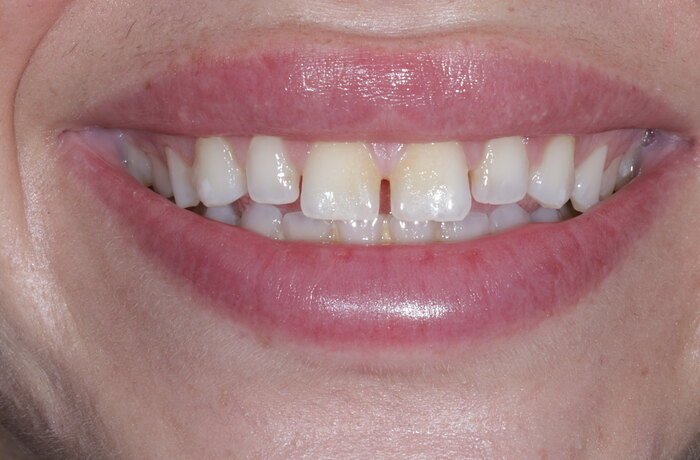 Before
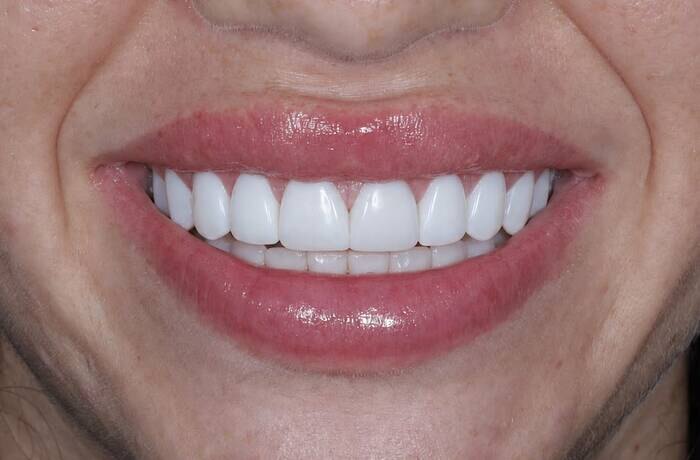 After
After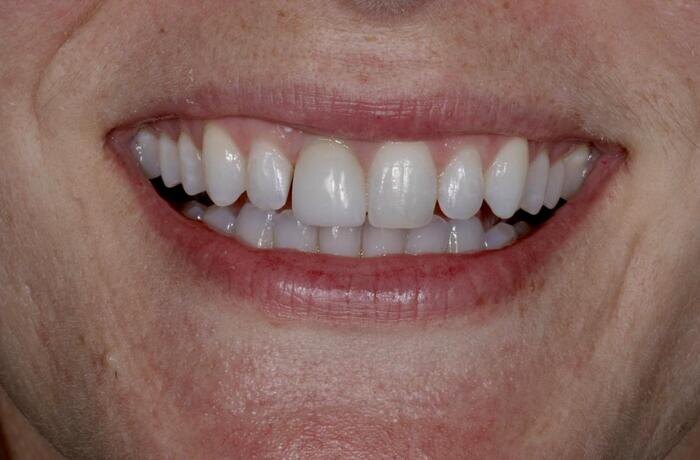 Before
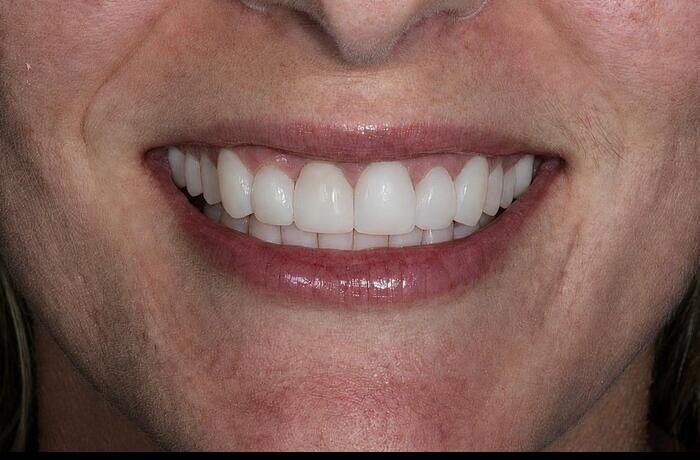 After
After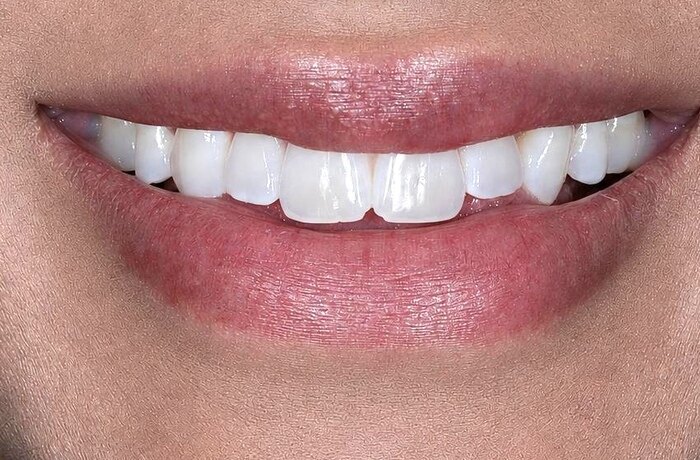 Before
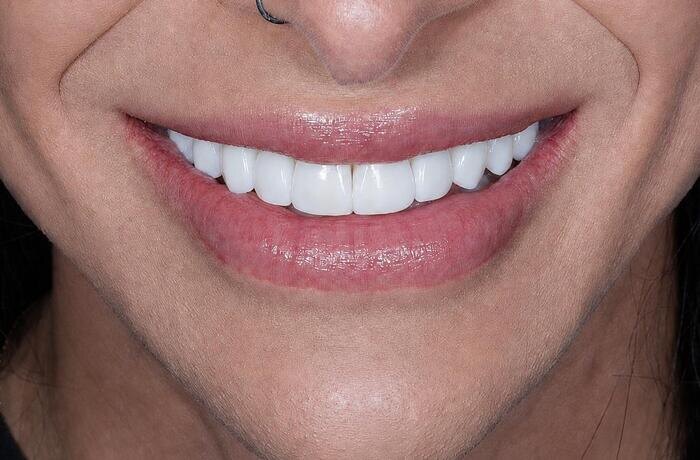 After
After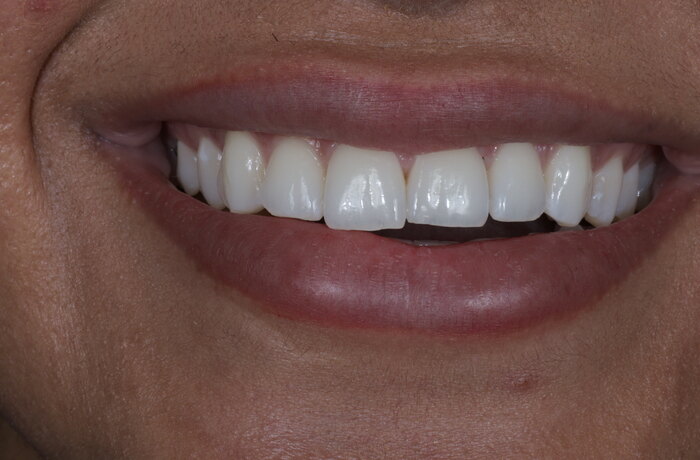 Before
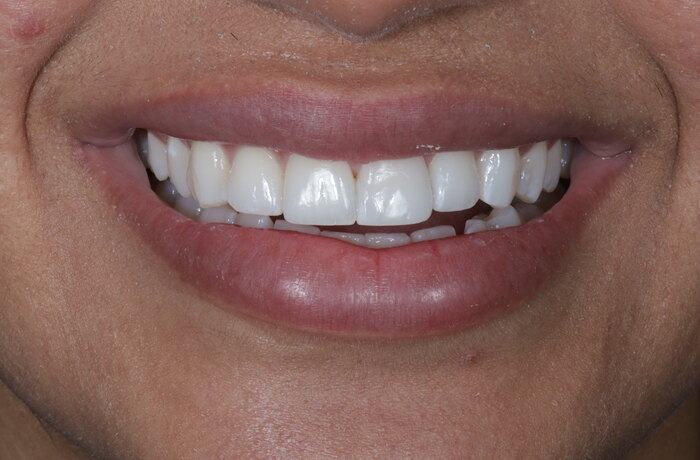 After
AfterResults vary by patient. Photos published with patient consent.
What bonding is, in plain terms
Bonding is tooth-colored composite resin, the same material we use for white fillings, shaped onto your tooth by hand, hardened with a curing light, and polished smooth. It’s done in one appointment, and in almost every cosmetic case we remove none of your natural tooth. That’s the part that matters most for a younger patient: bonding is completely reversible. Don’t love it, or want to switch to veneers down the road? The composite comes off and your tooth is exactly as it started.
The honest trade-off is wear. Composite is durable but softer than porcelain or enamel, so daily use slowly wears it. A good bonding job lasts about 5-7 years on front teeth, sometimes longer; veneers last 15-20-plus. You’re trading some longevity for a far lower price and the freedom to change your mind.
What it costs at our Mesa office
We put the numbers up front because affordability is usually the whole reason people consider bonding. A single cosmetic tooth runs $650-$850. A coordinated smile-line case across four to six teeth is $2,600-$5,100 total. A small trauma chip repair is $150-$400. Restorative bonding on a decayed spot is $200-$450. For comparison, a six-tooth smile in bonding is $3,900-$5,100 versus $8,400-$13,200 in veneers. Most dental PPOs, Delta Dental of Arizona, Cigna, Aetna, BCBS of Arizona, cover restorative and chip-repair bonding at 50-80% after your deductible; purely cosmetic work usually isn’t covered, but CareCredit and our in-house financing spread it out. We check your exact benefit before you commit to anything.
When bonding is the right call
- A chipped front tooth from a fall, a fork, or a hockey puck, rebuilt in about 30 minutes.
- A small gap (under 2mm) you’d like closed without aligners or orthodontics.
- Worn edges from years of grinding, when you want a fuller, more youthful tooth shape back (we’ll fit a night guard so it doesn’t wear straight back down).
- One oddly-shaped tooth, a pointed canine, a small peg lateral, a slightly rotated tooth, reshaped without a veneer.
- A single dark tooth from an old root canal or internal staining. Whitening can’t fix one dead tooth; bonding can color-match it to the rest.
- You want a change but aren’t ready for permanent work. Bonding lets you try a new smile first and upgrade later if you love it.
When it isn’t, and we’ll tell you
- Heavy grinding across many teeth. Bonding wears back down within 2-3 years if the grinding isn’t addressed first; those cases need a sturdier restoration plus a night guard.
- A large fracture involving more than half the tooth, not enough sound structure to bond to. That needs a crown.
- A full smile makeover of 6-8 teeth completely reshaped and color-changed. Veneers give a more uniform, longer-lasting result there.
- Back-molar chewing repairs. Bonding rarely lasts under heavy posterior bite force; inlays, onlays, or crowns are the right answer.
- Heavy daily coffee, tea, or tobacco without a maintenance plan. Composite picks up stain and needs a polish every year or two to stay bright.
What the appointment is like
- Shade match. Dr. Dawood picks a composite shade against your neighboring teeth in natural light, not just under the chair lamp.
- Surface prep. A 15-second mild etch gives the enamel microscopic texture for the resin to grip, then a thin primer.
- Layering. Composite goes on in thin layers, each cured for about 20 seconds. The layering is what makes it look like a real tooth instead of a flat patch.
- Sculpting. The contour is hand-shaped to match the edges and surface texture of your other teeth.
- Polish. Progressively finer disks and pastes bring it to an enamel-like gloss.
- Bite check. We mark and adjust any high spots until your bite feels even.
One tooth takes 30-60 minutes, genuinely a lunch-break fix. A four-to-six-tooth smile case is 90 minutes to two hours. Most cosmetic bonding needs no numbing, because nothing is drilled. If you’d prefer to go through the plan and the estimate in Spanish, Dr. Carlos Rogel and our front desk handle the whole visit in Spanish.
Bonding vs veneers, honestly
- Cost. Bonding $650-$850 a tooth; veneers $1,400-$2,200 a tooth.
- Lifespan. Bonding 5-7 years; veneers 15-20-plus.
- Reversibility. Bonding removes no enamel and is reversible; veneers require shaving ~0.5mm of enamel and are permanent.
- Stain. Veneers don’t stain; bonding picks up stain like a natural tooth and needs occasional polishing.
- Strength. Veneers handle heavy biting better.
- Time. Bonding is one visit; veneers are two over about three weeks.
If you’re in your twenties or thirties and not sure what you want for the next few decades, bonding now and veneers later is a sensible path. We’ll lay out both and let you decide.
Keeping it looking good
- Don’t bite hard objects, pens, nails, ice. Bonding chips at a stressed edge.
- Wear a night guard if you grind. Grinding is the number-one cause of early bonding failure.
- Go easy on chronic stainers, daily coffee, red wine, smoking, or plan on an annual polish.
- Touch-ups run $40-$80 per tooth every 1-2 years to keep the brightness.
- Replacement is the same procedure and price range when old composite finally wears or stains past polishing.
Why patients choose Glisten
All your dental work, in one place
Our small team of multi-specialty dentists handles implants, restorative, cosmetic, and orthodontics, so you're not being passed between three different offices to finish your work.
We advocate with your insurance
We file claims directly and follow up with your insurance company on your behalf to help cover what they should, instead of leaving the paperwork to you.
Honest, no-pressure plans
We recommend only what's actually necessary. Your treatment plan is written so you can take it anywhere for a second opinion, no hard sell, no over-diagnosis.